
Posted by Ecommersify Editorial on Sep 26th 2026
Chair-Seat Sanding: The Small Details You Feel Every Day
You may first notice a dining chair’s back, but you live with its seat. Its front edge meets the backs of your legs; its depth determines how you reach the backrest; its surface is one of the parts you touch every day. Chair-seat sanding deserves a closer look because it brings attention to those easily overlooked details.
Follow the surface, not just the silhouette
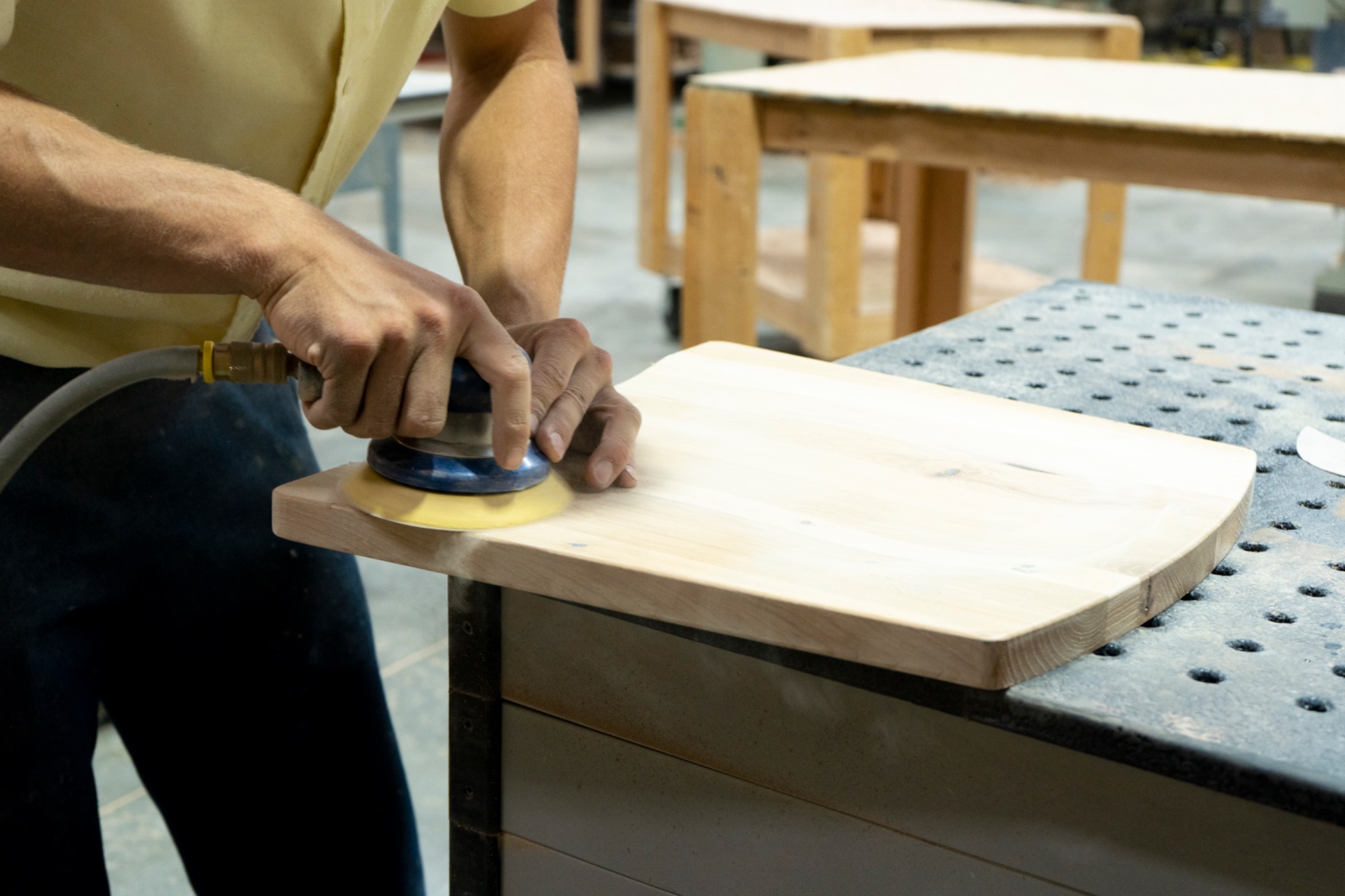
In our short workshop film, one hand steadies a shaped wooden seat while the other guides a handheld sander. The worker moves across the material with the seat supported on the bench. Watch how the broad face meets the edge: the component has depth and contour, rather than being a flat outline in a catalog photograph.
The film is a close view of surface preparation. It makes a useful companion to product photographs because it draws your eye toward the places where a chair is handled and felt.
Three details to notice when choosing a chair
The front edge: look at how the seating surface meets the front of the chair. An abrupt-looking profile and a rounded-looking profile create different visual and tactile expectations. Ask for another view if the main photograph hides this area.
The seat shape: compare a flatter seat with a visibly shaped one, then consider your preferred sitting posture. Contour alone does not establish comfort. The relationship between the seat and back matters too.
The usable space: overall width includes the frame and arms. Seat width describes a different measurement. Keep both on your shortlist so you know whether the chair suits the person and the table.
Our wooden dining chairs let you compare these details across actual designs. Save the dimensions of a chair you already enjoy as a personal reference.
Sanding and finish answer different questions
Sanding prepares a surface; stain, paint or a clear coating changes the finished surface in another way. The footage shows sanding, not the completed finish or its care requirements.
Before ordering, identify the selected finish and ask how to clean it. A close-up of the surface, an available finish sample and written care directions each answer a different part of the decision.
Bring the chair into the room on paper
Imagine a table with six chairs. The seat you enjoy on its own still needs room beside its neighbors, space for its arms and a clear route when someone stands up. Compare arm height with the table’s underside, and check where legs or stretchers meet the intended seating positions.
Then compare dining tables with the chairs in mind. The goal is a comfortable relationship between the pieces, not simply two finishes with the same name.
The workshop view gives a small detail its due. A chair earns its place through the way those details work together every time someone sits down.
Watch the workshop detail
Silent workshop film. This scene illustrates the process discussed above; it does not identify a specific catalog item.