Posted by Ecommersify on Oct 22nd 2026
Choosing Furniture Wood by Grain and Character
Hardware & Finishes
Choose furniture wood as a visible material, not simply as a name in a price list. Grain pattern, natural color, board variation and the selected finish all influence the result. The most useful wood is one whose appearance you enjoy on the scale of the furniture you are buying.
A table presents a broad horizontal surface. A chair breaks the wood into smaller curved or narrow parts. A dresser combines several fronts and a top. The same species and finish can therefore make different impressions across different pieces.
Separate species from color
A dark stain can make several species look closer in overall color, but their grain and texture remain part of the appearance. A natural or lighter finish may make the wood's own variation more obvious. Compare samples on the actual species offered for the product.
Do not choose a stain first and assume it will look identical on every wood. Instead, compare complete combinations. Record the species, any rustic or select designation and the finish name so your preferred result can be identified accurately.
Use broad characteristics as a starting point
The USDA Forest Products Laboratory describes black cherry heartwood as ranging through reddish browns, with lighter sapwood; black walnut also has a contrast between brown heartwood and much lighter sapwood. Hard maple has a fine texture. Quarter-sawn oak can display prominent ray figure. These characteristics help explain why samples differ, but they do not predict every board in a finished piece.
Treat those observations as a way to look more carefully rather than as a guarantee of uniform appearance. The manufacturer selects and combines material within the ordered specification. A small swatch cannot show the entire range that may appear across a large top or multiple drawer fronts.
Compare grain at the right scale
Stand back from the sample and then look closely. At a distance you notice overall contrast and direction; close up you notice individual lines, figure and color changes. Both views matter in a room.
If the floor already has pronounced grain, decide whether the furniture should repeat that energy or provide a calmer surface. If the room is visually quiet, a more expressive wood can supply character without adding decorative shapes or patterns elsewhere.
Understand rustic and select requests
Manufacturer terms such as rustic or select are part of the material specification, not just marketing descriptions. Read the available option and supporting information rather than assuming every maker uses those words in exactly the same way.
The manufacturer finishing notes distinguish requests for more consistent color from ordinary natural variation. If consistency is important, resolve the exact available selection and any charge before ordering. A stain choice alone should not be treated as a promise that contrasting boards, sapwood or character features will disappear.
Keep different maple and oak choices distinct
A product may list Brown Maple, Hard Maple, White Oak, Red Oak or quarter-sawn options separately. Do not collapse them into a generic maple or oak request. The offered name identifies a particular material choice and may have different finish selections or pricing.
Use the exact product menu terminology when comparing samples. If a sample label does not match the listed material, clarify the relationship. A similar-sounding name is not sufficient evidence that the sample represents the same offered wood.
Avoid choosing by a single hardness ranking
Furniture performance depends on construction, design, finish, use and care as well as the material. A single hardness number cannot predict how a particular chair feels, whether a table fits the room or how a finished surface will respond to every kind of use.
Choose a wood supported by the manufacturer for the selected piece and evaluate the whole product. If you have a specific use concern, describe that concern directly rather than asking for the best wood in the abstract. The practical answer may involve the surface treatment, shape or care routine alongside species.
Plan coordination across several pieces
Using the same species and finish can create continuity, but separately made pieces still contain natural material variation. Mixing species can also work if the relationship is intentional. Compare the actual samples together and decide whether color, grain scale or overall warmth is the connecting feature.
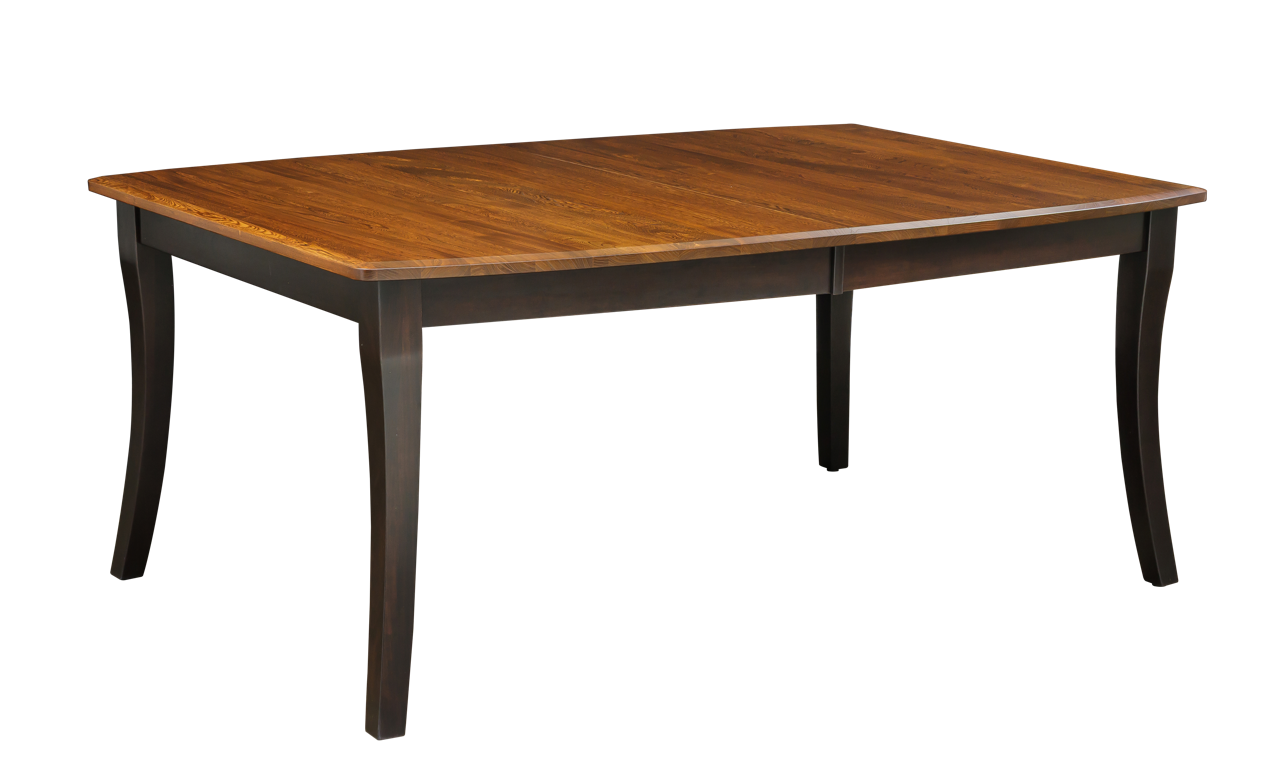
If a single piece uses contrasting woods, confirm that the construction and pricing are supported. A finish photograph showing a different-colored top is not proof of a different species. Distinguish the visual effect from the underlying material specification.
Choose the variation you want to live with
Review more than one representative example when available. Ask yourself whether you enjoy the light and dark areas as well as the average color. For a large table or cabinet, imagine that character repeated across a much broader surface.
Keep the approved material and finish identifiers with your order. The goal is not to eliminate everything natural about wood; it is to choose a level of grain and variation that belongs in your room and matches your expectations.