
Posted by Ecommersify Editorial on Sep 26th 2026
How to Choose an Adirondack Chair That Feels Comfortable
An Adirondack chair can look inviting and still be the wrong fit for its owner. Comfort depends on how the seat height, depth, back angle and arms work together. The most useful reference is a chair you already enjoy sitting in.
Before browsing colors, measure that familiar seat and note what you like about it. You now have a personal comparison tool.
Start with the way you enter and leave the chair
A low seat with a reclined back can feel relaxed, but getting up is part of the experience too. Compare front seat height and the position of the arms. Think about whether you prefer to settle deeply or sit more upright.
Our Adirondack chairs should be compared by actual dimensions and design. A collection name describes a style family; individual chairs can have different proportions.
Read seat depth with back angle
A deep seat affects where your knees meet the front edge and how easily your back reaches the backrest. Recline changes that relationship again. If you plan to use a cushion, include its thickness in your thinking rather than treating it as decoration added afterward.
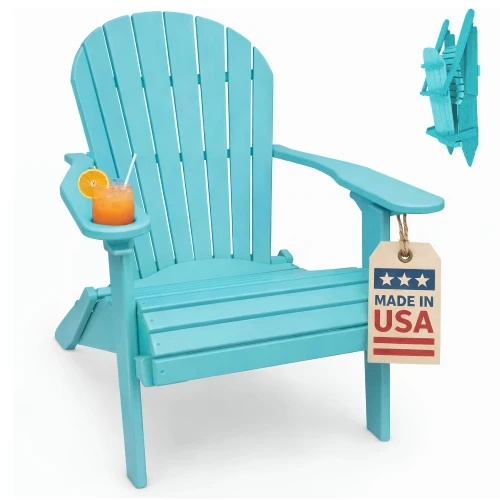
A photograph from the side is especially helpful. It shows the seat slope and the relationship between the back and arms more clearly than a straight-on product view.
Separate usable width from overall width
Overall width includes the frame and arms. Usable seat width tells you how much room is available between them. Record both: one concerns the person, the other concerns the patio.
If you like to rest your forearms close to your body, very widely spaced arms may feel different from what you expect. If you enjoy a roomier posture, a narrow usable seat can matter even when the chair looks substantial.
Give accessories a purpose
A cushion can change support and seating height. A footrest can change how much room the arrangement occupies. Add an accessory because it serves the way you sit, then confirm compatibility and what is included in the order.
Choose an outdoor side table after selecting the chair. Compare its height with the arm and test where a cup or book would sit within easy reach.
Plan the pair, not only the single chair
Two generous chairs can overwhelm a small seating area when their arms, a table and a walking route are added together. Mark the complete arrangement on the floor. For moving models, include the specified rocking, gliding or swivel space.
Use a comfort shortlist
Keep five lines for each candidate: seat height, depth, usable width, back position and arm height. Add your own note about the posture you want. If those details are missing, ask before buying.
Compare other patio chair styles too. A successful purchase is the seat you look forward to using, whether or not it was the first silhouette you imagined.