Posted by Ecommersify on Oct 22nd 2026
Round or Rectangular Dining Table? Compare the Whole Footprint
Dining Tables & Sets
Choose table shape by the space it occupies with people seated, not only by the outline of the top. A round table and a rectangular table can serve the same number of diners while asking different things of the room. Chair size, base placement and extension behavior are part of the comparison.
Start with the room's usable area after accounting for doors, storage and walkways. A table that appears well proportioned on an empty floor plan can feel very different once chairs are pulled out and a cabinet door is open.
Consider how people gather
A round top can make a small group feel evenly arranged, with no obvious head of the table. A rectangular top establishes long sides and ends, which can suit a longer room and a more directional seating plan. These are ways of organizing the group, not guarantees of comfort.
Think about the meals you actually share. If conversation among a small everyday group matters most, compare the distances across the table. If serving dishes tend to occupy the center, consider how easily people can reach or pass them. A larger top of any shape can place its center farther away.
Match the outline to the room
A round table can be a useful candidate for a roughly square dining area. A rectangular table can follow a longer space. However, an alcove, doorway or kitchen island may make the usable area different from the room's overall dimensions.
Mark the proposed top on the floor and place existing chairs around it. Include the part of each chair that projects beyond the top. Walk the routes to the kitchen and adjacent rooms. The mock-up helps distinguish a visually appealing shape from one that actually supports movement.
Look beneath the top
A pedestal may remove corner legs from some seating positions, but its feet and column still occupy space. A leg table may offer open space through the center while limiting the width between legs. A trestle or double-pedestal base introduces another arrangement of supports.
Compare the actual base drawing or measurements. Do not assume all round tables have the same usable space beneath them or that every rectangular table permits the same end seating. The table's outer size does not reveal where a diner's feet or an armchair will meet the structure.
Compare chair width around the perimeter
Chair width affects how many comfortable places fit. Armchairs may need more room than narrow side chairs, and a chair's maximum width may occur at the arms or back rather than the seat. Measure the complete chair.
On a round table, chairs angle around the perimeter. Their backs and arms may approach one another even when the seats look adequately spaced. On a rectangular table, corner and end positions require particular attention. Test a realistic arrangement rather than dividing the table's length by an assumed universal allowance.
Treat extension as a second shape decision
A round table with a center leaf usually becomes a longer shape when opened. The room must accommodate that arrangement as well as the closed circle. A rectangular table can also change its relationship to nearby storage and doorways as leaves are added.
Use the selected model's exact leaf count and width. Calculate the full open length and mark it on the floor. Then locate each chair and base support. The fact that the mechanism extends does not establish a comfortable seating position at every point along the expanded perimeter.
Consider how the table is used between meals
A rectangular top may create a clearer end for a laptop, homework or a project. A round top may encourage activities arranged around the center. Either can work, but the household's routines affect which feels natural.
Think about where temporary items go when it is time to eat. If the table is also a work surface, nearby storage can matter more than shape alone. Surface texture and chair comfort deserve attention too. A beautiful outline cannot compensate for a surface or seating arrangement that does not suit daily tasks.
Evaluate the visual effect
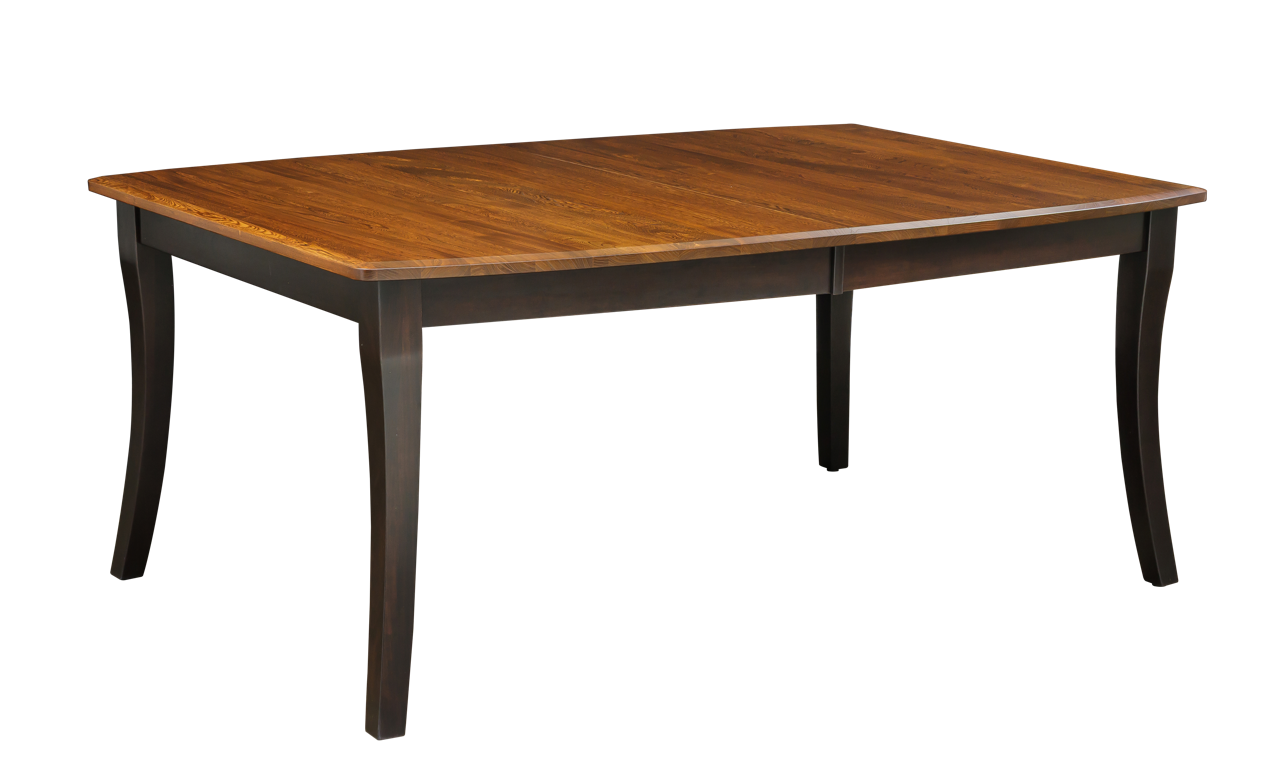
Corners, curves, top thickness and base design all influence how the table reads. A round top with a substantial pedestal can feel more prominent than a rectangular table on slim legs. A shaped rectangular top may soften a long room without becoming circular.
Compare complete designs rather than reducing the decision to circle versus rectangle. View the base, edge profile and finish together, and consider the furniture visible from adjoining rooms.
Choose the shape that passes both layouts
Make two room plans if the table extends: one for ordinary days and one for the largest gathering you realistically expect. Keep cabinet access and walking routes visible on both. If only one layout works, reconsider the size, seating or location before ordering.
The strongest choice gives the everyday group a comfortable place and makes occasional use manageable. Shape is one part of that result, working together with size, chairs and the table's actual structure.