
Posted by Ecommersify Editorial on Sep 26th 2026
Dining Table Edges: How Shape Changes the Look and Feel
A dining table’s edge is where its shape becomes personal. You see it from the doorway, rest your hands near it and pull a chair up to it. A broad top may dominate the photograph, but the edge determines how that surface finishes against the room.
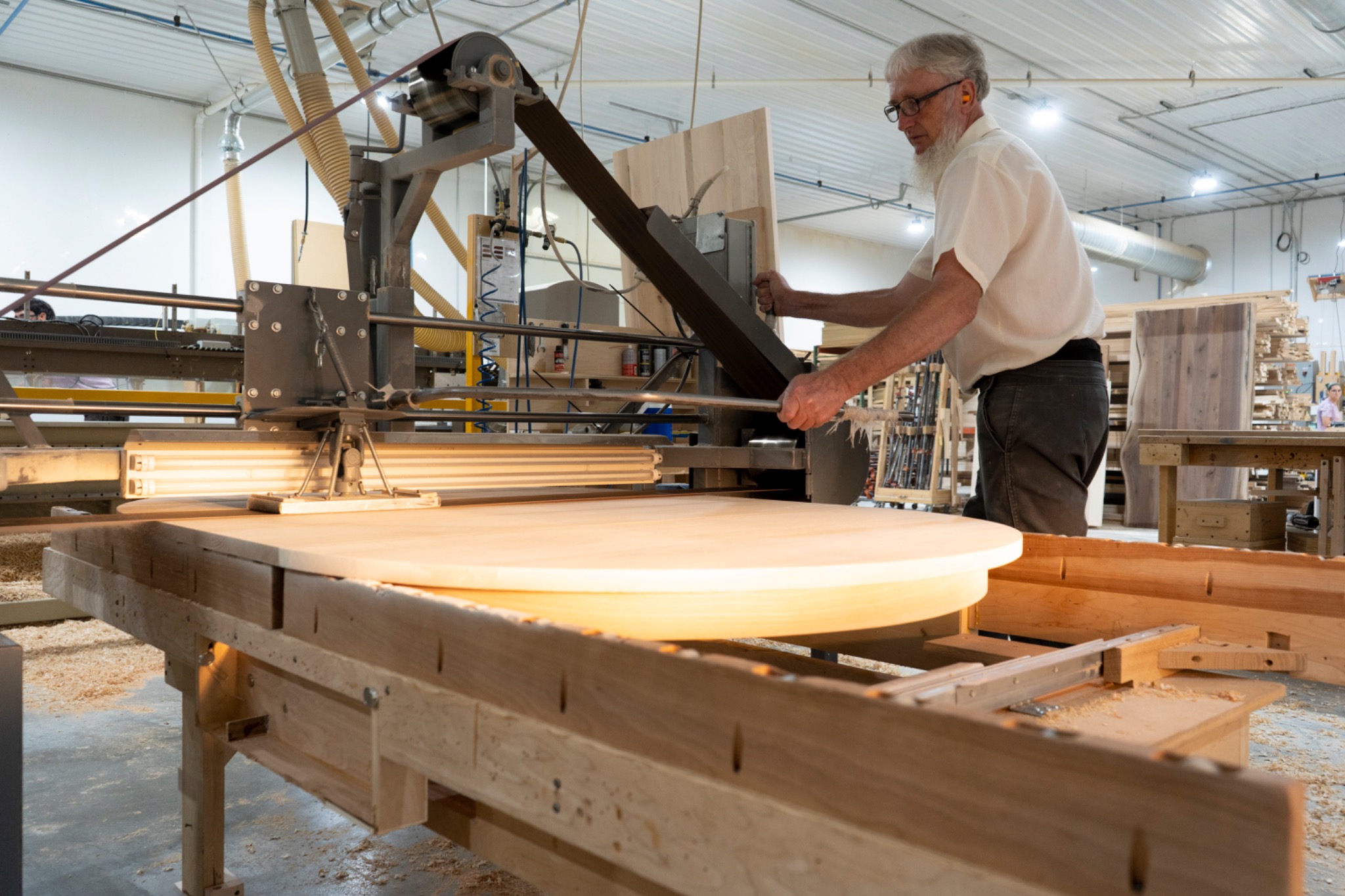
Our workshop film follows a handheld router along a curved tabletop. The movement brings this small design decision into focus.
What the edge contributes
Look at a tabletop from the side as well as from above. A substantial square-looking profile can emphasize thickness; a rounded or softened profile can make the same general form read differently. Edge shape and finish together affect how light catches the perimeter.
When shopping for wooden dining tables, ask for a side view if the product photography mostly shows the top. It is the quickest way to judge whether the piece feels visually heavy, light, formal or relaxed to you.
A round outline still needs a complete floor plan
A round table removes projecting corners from its outline. It does not eliminate the space occupied by diners or chairs. A rectangular table can make good use of a long room, while a round top can create a different arrangement in a more square dining area.
Test the actual dimensions. Mark the proposed top on the floor, place chairs around the outline and pull them out as if people were getting up. Walk the route between the kitchen and the far side of the table. That test often resolves a shape decision more clearly than a styled photograph.
The base decides where people can sit
A pedestal, four legs and a trestle create different spaces beneath a table. Check where feet and knees will go, especially at corners or end positions. A table’s advertised seating capacity is a starting point; chair width and base placement still need to work together.
Browse dining chairs with arm height and overall width in view. If you want a coordinated starting point, compare dining sets, then verify their dimensions against your room.
Notice what the workshop film shows
The router follows the curved perimeter while the tabletop is supported. Shavings and the changing angle of the tool make the operation easy to follow. This is one stage in shaping an edge, rather than a demonstration of the finished table’s care or assembly.
Once you return to a product page, keep shape, finish and dimensions on separate lines of your comparison. That makes it easier to see why two tables with similar tops can suit very different rooms.
Make the decision in everyday terms
Ask three questions: Do I like this profile from the doorway? Can the chairs and people fit comfortably around it? Does the selected finish suit the way I use the table? A good dining table needs all three answers to work together.
Watch the workshop detail
Silent workshop film. This scene illustrates the process discussed above; it does not identify a specific catalog item.