
Posted by Ecommersify Editorial on Sep 26th 2026
Wooden Bunk Bed Buying Guide: What to Measure Before Ordering
A wooden bunk bed must fit more than the floor. The room needs space for the complete frame, ladder access, permitted mattresses and the clearances specified by the manufacturer. Suitability for the intended users matters as much as the dimensions.
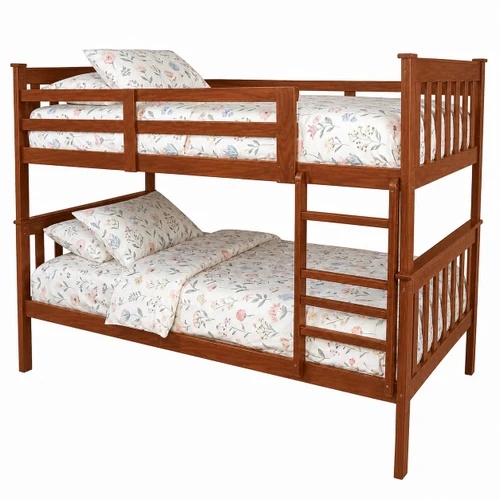
Start with the exact bunk bed model and its instructions before planning the room around it.
Measure the outside frame and access
Record the complete length and width, including posts, projecting rails and the ladder or staircase. Mark that footprint and the required access area on the floor. Open doors, closet doors and nearby drawers.
Keep ordinary walking routes and exits usable. The arrangement should provide the intended route to the upper bunk without encouraging climbing on other furniture.
Check the ceiling at the actual location
Measure at the planned position, especially under a sloped ceiling. Note ceiling fans, light fittings, windows and window-covering cords. Compare the layout with the product’s placement and clearance instructions.
The space above the upper mattress depends on the frame and the mattress thickness together. A room that accommodates the empty frame may not provide a suitable occupied arrangement.
Use the specified mattress size and thickness
The bed’s label and instructions should identify the permitted mattress dimensions. A thicker mattress or added topper can reduce the effective guardrail height. Use only the complete mattress setup allowed by the manufacturer.
Federal bunk-bed requirements address guardrails and entrapment hazards; they are not a reason to substitute your own mattress or support arrangement. Keep the product labels and assembly information available for future reference.
Match the bed to its users
The U.S. Consumer Product Safety Commission advises that children under six should not use an upper bunk. Follow the product’s own age, weight and use restrictions as well. Room fit does not establish that the upper sleeping position is appropriate for a particular person.
If the users or the space are not suited to bunks, compare a lower bed or daybed instead.
Plan storage without altering the bed
Use only compatible accessories and follow their instructions. Do not remove guardrails or add hooks, cords or other attachments that introduce hazards. Keep ladder access clear even when the room is busy.
If considering under-bed storage, confirm compatibility with the exact frame and leave the required route around it.
Measure delivery and assembly access
Check doorways, stair turns and the space needed to assemble the bed. Follow the instructions for all fasteners, supports and guardrails, and stop using a bed with damaged or loose structural components until it has been assessed.
Ask us for missing product measurements before ordering. A careful room plan starts with the correct model information and keeps the needs of the people using the bed at its center.