
Posted by Ecommersify Editorial on Sep 26th 2026
Wood Grain and Board Layout: Why Every Tabletop Looks Different
Two tables can share the same design and finish while their surfaces tell different visual stories. Grain changes direction, neighboring boards vary in tone and light falls differently across the top. That variation is part of choosing natural wood.
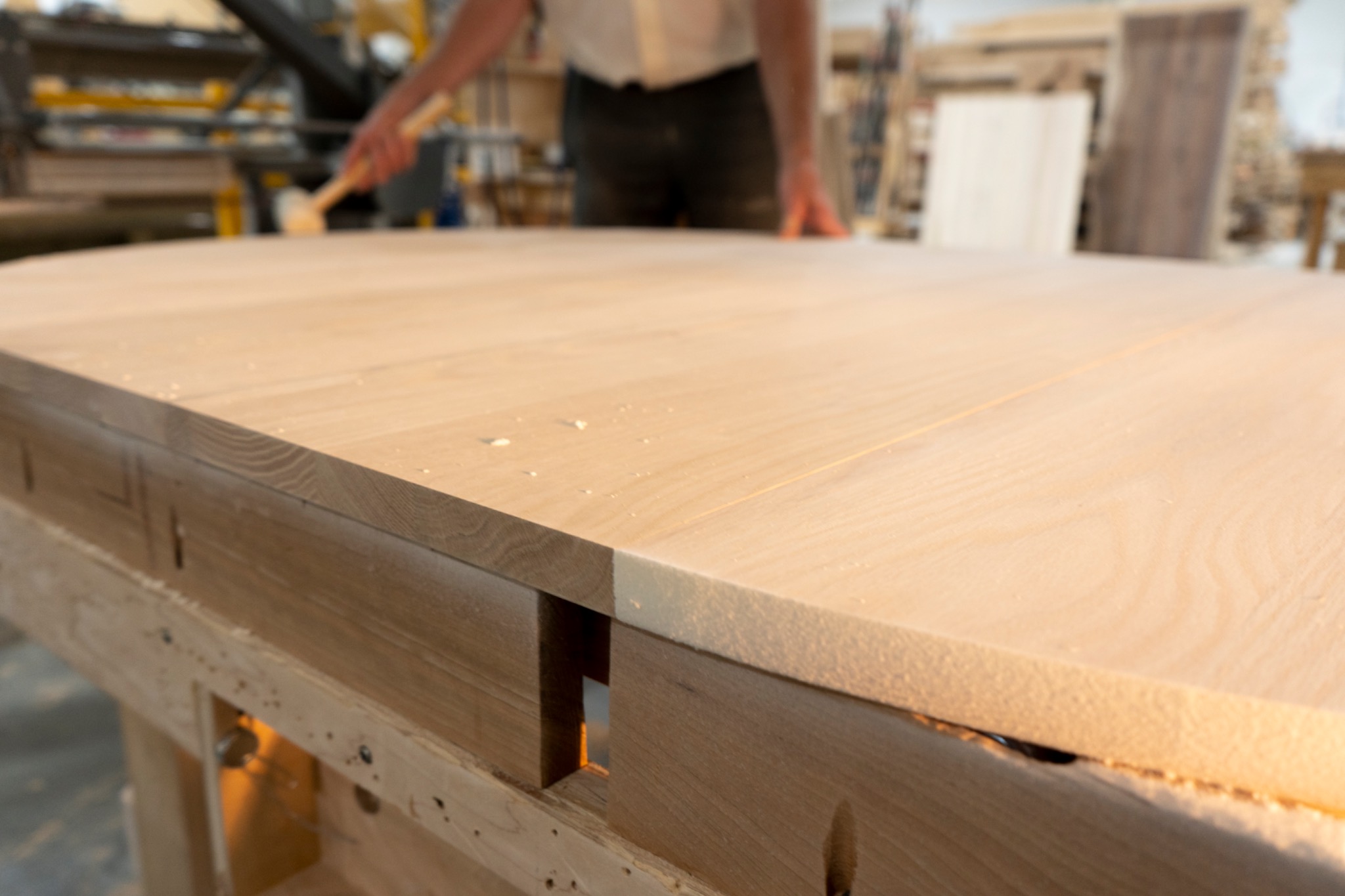
A board-layout film makes the idea easier to see. Before a broad surface reads as one shape, you can notice the individual pieces that contribute to it.
Read the top as a composition
In the featured footage, long boards lie alongside one another. Their tones and grain patterns differ. Look first at a single board, then let your eye move across the group. The broad arrangement has a rhythm created by its individual parts.
For a furniture buyer, this is a useful distinction: the finish color is one decision, and the natural figure beneath it is another. A color name cannot describe every line in the wood.
What a finish sample does well
A sample can help you compare a selected finish with your floor, wall color and nearby furniture in your own light. Place it near the surface you are trying to coordinate with, then look again in the evening.
A small sample cannot display every grain pattern across a whole dining table. Ask what variation is expected and whether the product photograph shows the exact piece for sale or an example of the design. Both situations can be straightforward when expectations are clear.
Decide how much variation you enjoy
Some rooms benefit from a lively tabletop with contrasting grain. Others call for a quieter surface because the floor, cabinetry or textiles already supply a great deal of detail. Neither approach requires every wood tone to be identical.
Try a simple visual exercise: choose the strongest existing wood surface in your room, then compare the proposed table beside it. Does the new piece repeat a warm or cool tone, create a deliberate contrast, or introduce a third direction you did not intend?
Our dining tables are a place to compare actual shapes and finishes. The hickory collection offers another direction when you enjoy visible natural character in the frame as well as the broad surfaces.
Grain is not the same as a condition problem
Color variation and changes in figure are visual characteristics. Looseness, damaged connections or a change that affects support need a separate assessment. If something concerns you after delivery, photograph the whole piece and the detail, then contact us before attempting a repair.
For a deeper explanation of a different wood feature, read natural checking in log furniture.
Let the material have room to be seen
A strong grain pattern often needs fewer competing accessories. Leave part of the top visible, choose nearby textiles intentionally and let the table’s surface contribute to the room. The beauty is in the particular arrangement you live with, rather than an expectation that every board will look the same.
Watch the workshop detail
Silent workshop film. This scene illustrates the process discussed above; it does not identify a specific catalog item.