

Posted by Ecommersify Editorial on Sep 26th 2026
Garden Bridge Ideas for Ponds, Dry Creek Beds and Quiet Corners
A garden bridge works best when it seems to belong to a journey. It can connect a path, frame a pond or lead the eye toward a quieter part of the yard. Begin with that purpose, then choose a bridge whose size and outline support it.
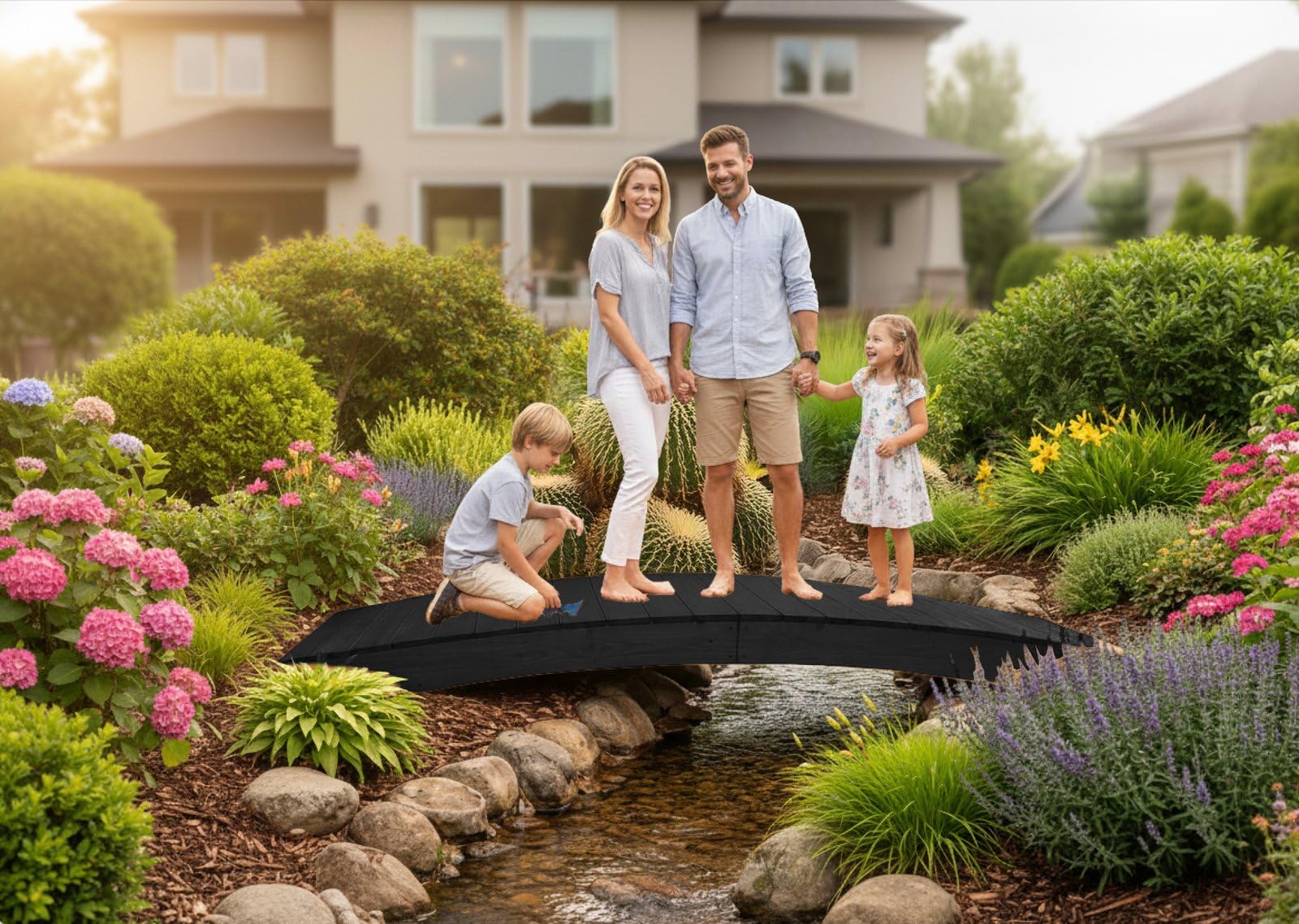
The strongest arrangement is often the one that leaves enough space around the bridge for the landscape to remain visible.
Frame a pond view from a place you already use
Look at the pond from a patio chair, a window and the garden entrance. An off-center bridge may preserve more visible water and leave room for planting at one end. Sketch the view before choosing the exact position.
Keep pond equipment and maintenance access in the plan. Confirm material and finish suitability near aquatic life with the maker and a pond professional, and keep treatments and cleaning runoff out of the water.
Give a dry creek bed a believable route
A path approaching one end and continuing beyond the other makes the bridge feel purposeful. Let planting soften the transition without hiding the deck or constricting access.
A simple plank outline can allow stone textures to lead. A more prominent rail design can become the focal point. Compare the shapes in our garden bridge collection from the viewpoint that matters most in your yard.
Create a quiet Japanese-inspired composition
Use a limited palette of stone, foliage and a restrained wood finish. Leave open space where the bridge’s curve or horizontal line can be appreciated. Repeat one material or color elsewhere rather than filling every gap with another feature.
This approach borrows the idea of a calm, considered composition without claiming to reproduce a specific traditional garden design. Let the scale and planting suit your own site.
Add a place to enjoy the view
A garden bench can turn a bridge from something you pass into something you pause to look at. Place seating where it sees the scene without blocking the approach or competing with the bridge’s outline.
Think about morning and evening light. The best position may be the one you will use after work rather than the one that looks most dramatic at midday.
Resolve use and support before installation
Decide whether people will cross the bridge. Confirm the selected model’s intended use, supports and capacity, and have functional crossings over water or a drop assessed professionally. Decorative rails are not evidence of a protective barrier.
Our bridge measuring guide separates overall length, supported span and clear width so the design can rest on a sound plan.
Test the composition without buying anything yet
Lay out the proposed path and bridge footprint with a hose or string. Photograph it from your main viewpoints, then compare the actual product dimensions. A few adjustments at this stage can make the finished feature feel much more natural.
Explore Garden & Outdoors with one clear scene in mind. A bridge needs a reason to be there—and a place from which to enjoy it.