
Posted by Ecommersify Editorial on Sep 26th 2026
Decorating with Hickory Furniture: Texture, Color and Room Balance
Hickory furniture can do the visual work of several accessories. Branch-like lines, bark texture and changing wood tones bring detail into a room before you add a cushion or lamp. Decorating around it begins with deciding where you want that character to lead.
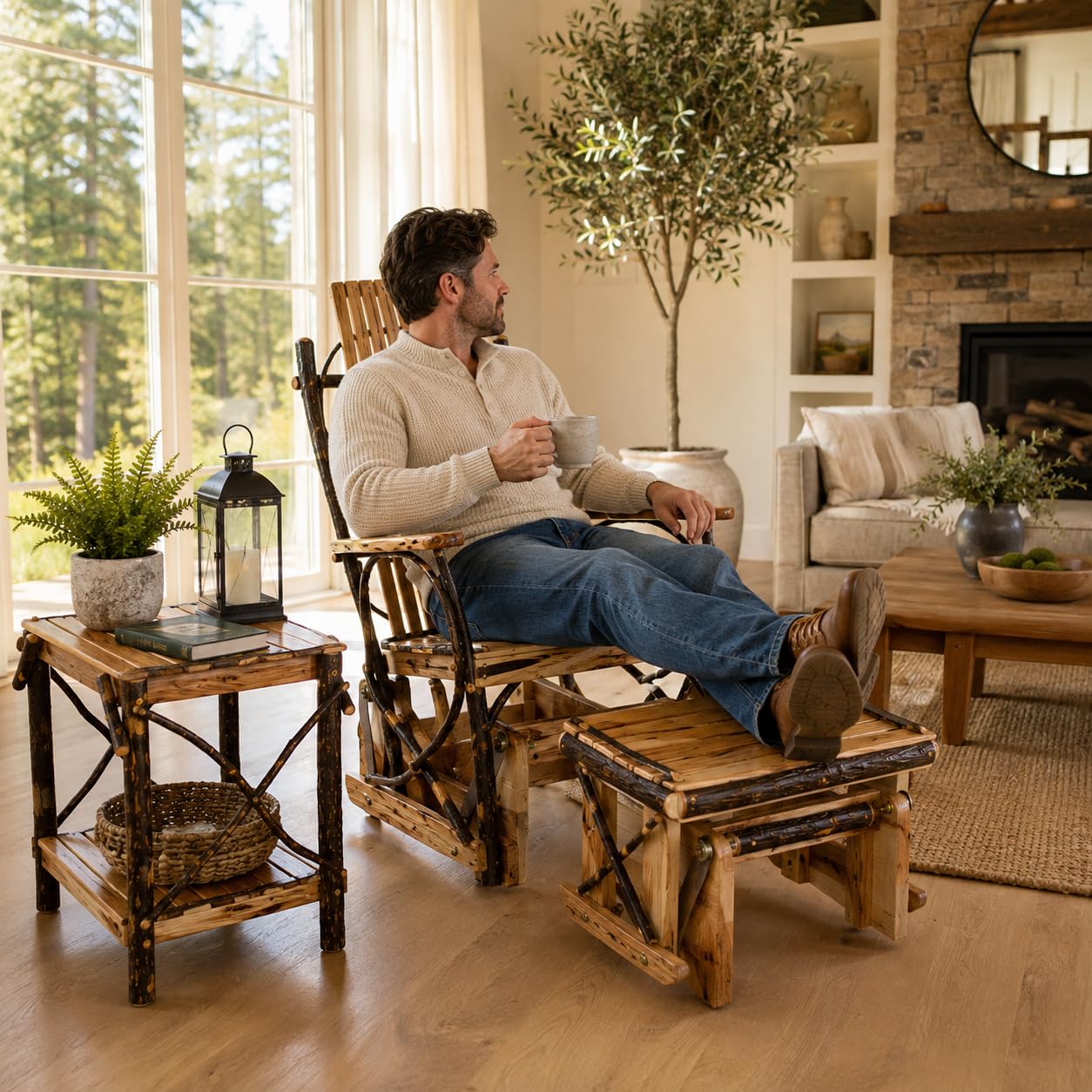
Choose one piece that has a job
Start with the furniture you most want to use: a reading chair, a glider or a table beside a favorite seat. Give that piece a useful setting before extending the look across the room.
Our hickory collection includes different furniture types, so you can introduce the material at the scale that suits your home. An accent can be enough to change the feeling of a space.
Build a reading corner around reach
Place the chair first. Then choose a reachable side table for a book or cup and lighting that serves the seat. A beautiful table that sits beyond comfortable reach will feel less useful every day.
For a glider, allow the model’s required motion clearance before placing the table, lamp or ottoman. Keep cords and small objects out of the moving area. The seating arrangement should work while the furniture is in use.
Let texture meet a quieter background
Try hickory beside plain upholstery, a softly textured rug or a simple wall color. Those quieter surfaces make the branch work easier to see. This does not require an all-neutral room: one deliberate color can be more effective than several unrelated patterns.
If you love a patterned quilt or rug, use it as a partner to the wood. Pull one color from the pattern into another textile, and keep the remaining surfaces calmer. Stand in the doorway to judge the whole arrangement, then sit down to judge the close view.
Mix wood tones intentionally
Hickory does not have to match the floor exactly. Compare warmth, contrast and visual weight. A smooth painted cabinet can provide useful contrast beside a textured chair; another heavily patterned wood surface may compete with it.
Use finish samples where available and view them in the room’s daylight and evening light. Save the exact finish selection when ordering related pieces. Natural variation makes coordination a matter of relationships rather than perfect duplication.
Add fewer, more useful objects
A throw you reach for, a lamp that lights the page and a table that holds what you need will usually contribute more than a crowded display of rustic accessories. Let the furniture itself supply some of the decoration.
Before choosing a piece, read our rustic hickory buying guide for materials, proportions and finish questions. A considered room brings visual character and everyday usefulness together—and leaves enough space to enjoy both.