
Posted by Ecommersify Editorial on Sep 26th 2026
Rustic Hickory Furniture: A Buyer’s Guide to Character and Construction
Rustic hickory furniture brings branching lines, bark texture and natural variation into a room. Those details create its appeal, but choosing a piece well also means understanding the materials in its different parts, the finish and the proportions you will use every day.
Start with one purpose—a reading seat, a dining chair or an accent table—then let the material give that useful piece its character.
Read the materials component by component
A hickory frame may sit beside a seat, tabletop or panel made from another specified material. Read those descriptions individually rather than assuming the collection name identifies every surface.
Browse the hickory furniture collection and note the frame material, major surfaces and finish for each candidate. This makes it easier to compare a branch-framed chair with a more substantial cabinet or table.
Expect individuality in the wood
Grain, tone, branch shape and bark character can differ between pieces. A photograph shows the design and one example of the material. Ask what variation to expect, particularly when coordinating with furniture you already own.
Use a finish sample where available, but remember that a small sample cannot show every natural feature across a complete frame. Decide whether that individuality is part of what you want the room to celebrate.
Look closely at the connections
Where the listing names a construction method, connect the term to the actual part. Look at the junction between legs and rails, the relationship between seat and frame, and the support beneath a broad surface. Ask for another view if a detail important to you is hidden.
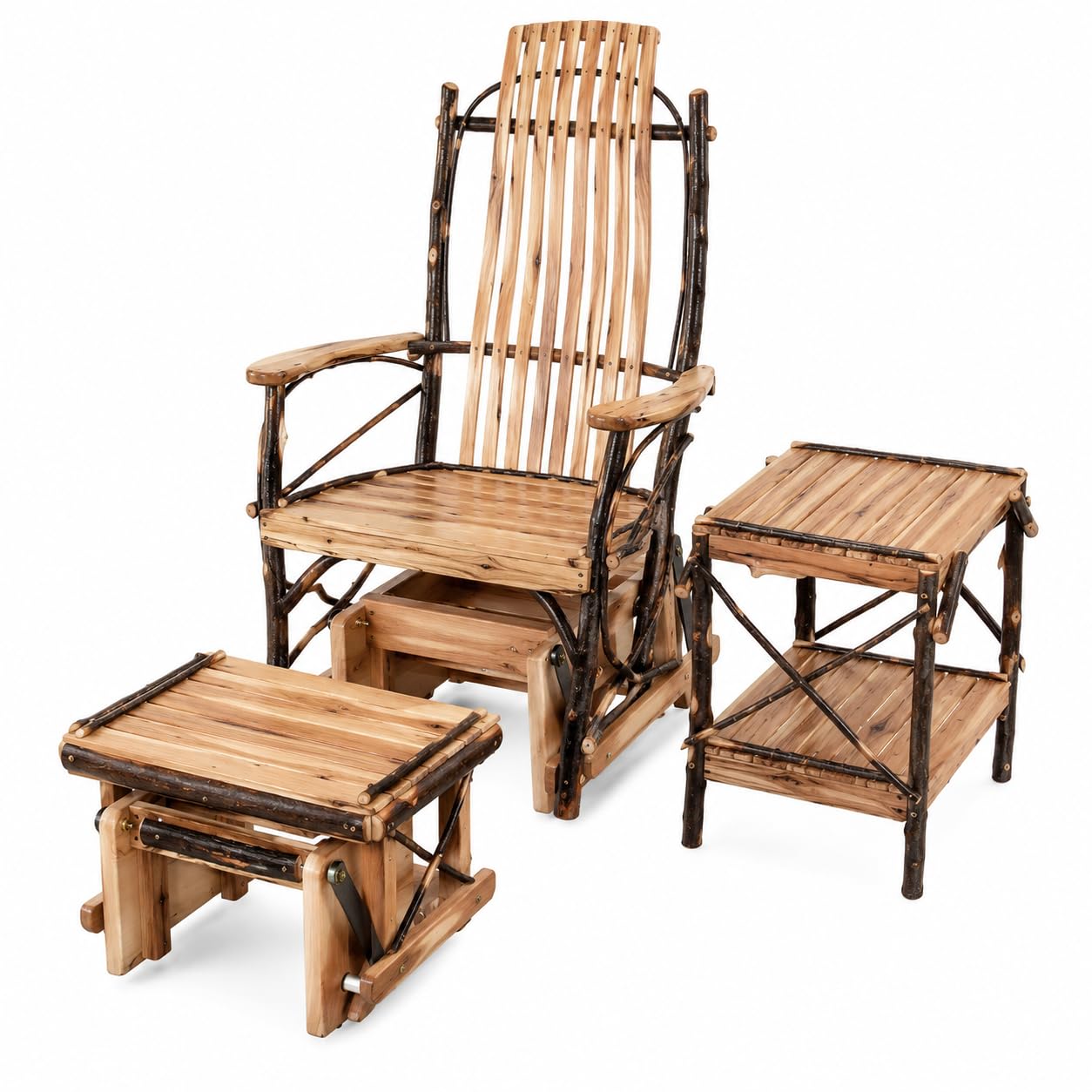
For hickory gliders, consider the motion mechanism separately from the visible woodwork. Check the dimensions and required moving space before arranging nearby furniture.
Choose the finish in the room’s light
Compare the proposed finish with your floor, walls and largest upholstered piece. A darker appearance can create a strong outline; a lighter one can reveal a different relationship between bark and smooth surfaces. These are design choices to judge with the actual options.
Our hickory decorating guide shows how quiet textiles and useful room arrangements can let the wood lead without overwhelming the space.
Make scale and reach part of the decision
Record overall dimensions and usable seat dimensions separately. A generous-looking frame can still have a particular sitting depth or arm position. Choose a side table after the seat so its height and location work within comfortable reach.
If the setting includes an ottoman, allow room to approach the chair and move around the arrangement. Useful spacing gives a visually strong piece room to be appreciated.
Before ordering, confirm selected options, included items, assembly and care. The best hickory purchase combines a look you enjoy with clear expectations about the individual piece arriving at your home.