
Posted by Ecommersify Editorial on Sep 26th 2026
Do Amish Furniture Makers Use Power Tools?
Yes, some Amish furniture makers use powered equipment. Amish approaches to technology are selective and shaped by local church practice. The presence of a machine does not, by itself, answer how a workshop is powered or how another community organizes its work.
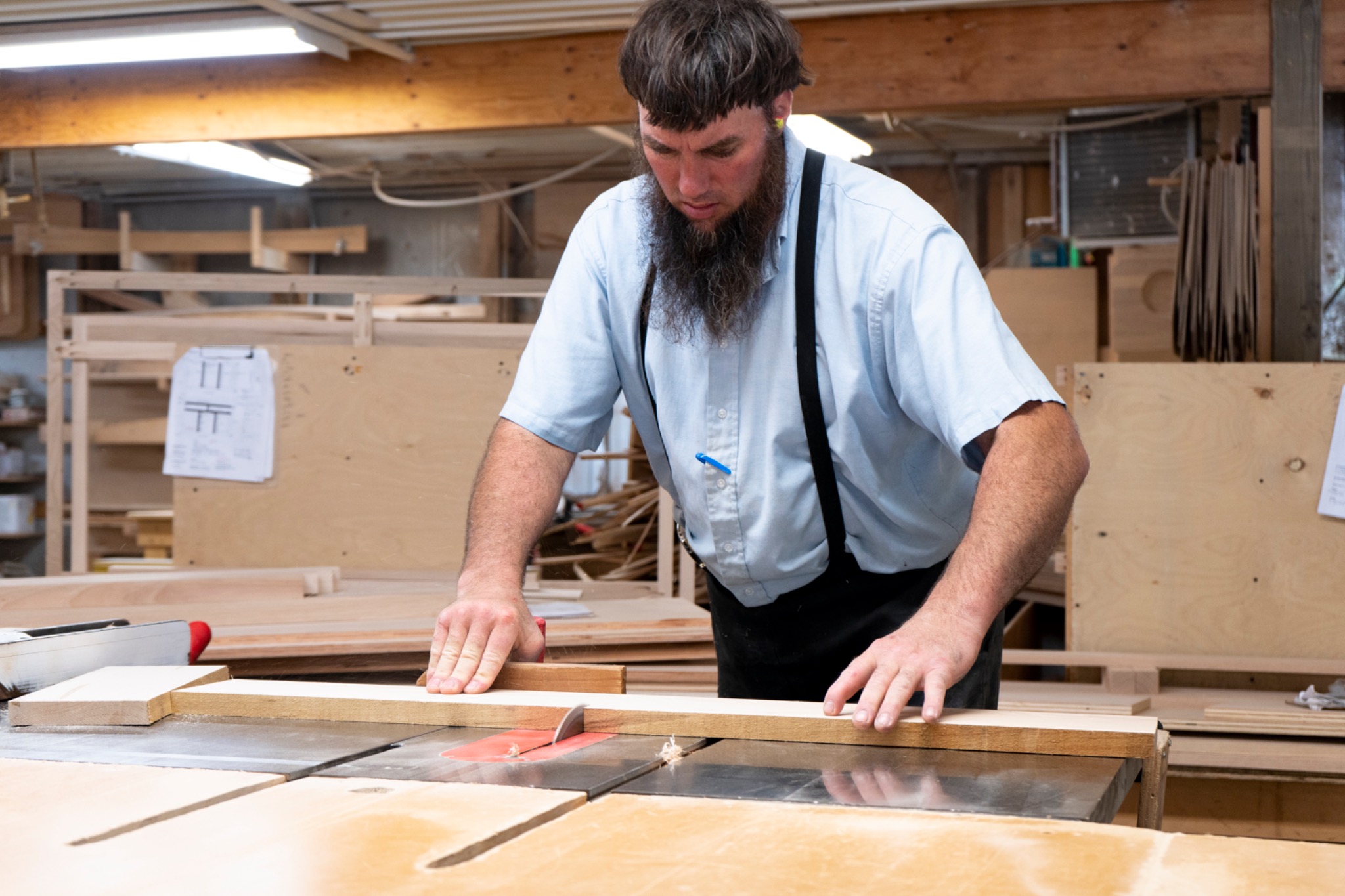
For a furniture buyer, the more revealing question is what the maker does with the tools: how components are handled, how surfaces are prepared and how separate parts become a useful object.
Why technology is considered selectively
Restrictions on technology often concern its effects on community life. Mobility, outside media and dependence on distant systems can matter alongside a tool’s immediate usefulness. A device can be practical in one setting yet restricted in another because of what its wider use would change.
Some communities permit batteries, solar charging or adapted equipment. Rules are local, and a power source suitable in one setting is not a universal Amish standard. That is why a simple list of “allowed” and “forbidden” machines rarely explains the whole subject.
Workplaces are part of a changing economy
Amish livelihoods include farming, construction, small businesses and employment outside Amish-owned firms. Furniture making is one branch of this varied working life. Home-based enterprises and workshops can keep work close to a community while serving customers far beyond it.
Different tasks call for different processes. Shaping a repeated component, preparing a broad surface and fitting an assembly are separate jobs, each with its own demands on the worker and equipment.
Watch the relationship between hand and material
In the workshop film below, workstations, material stacks and extraction hoses organize a shared working space. Other films in our series move closer to a shaped chair seat or a tabletop edge.
Look for the decisions around the machine: where a component is supported, how it is turned, and how the worker approaches the next part of its surface. A machine’s movement is only one part of the scene. Handling and positioning connect the equipment to the object being made.
What “Amish-made” should lead you to ask
A maker’s background and a product’s construction answer different questions. Once you have found a piece you like, look for the material in its main components, its dimensions, the finish offered and how it arrives. Specific information about the furniture is more useful than an assumption that every workshop uses an identical process.
Start with our dining tables or dining chairs. Compare the broad tabletop, the seat and the supporting frame as separate parts of the design. Those are useful details whether your preferred look is rustic or restrained.
For a more focused workshop view, read why chair-seat sanding matters and how a table edge changes its character. The films show stages of work; the individual product listings provide the specifications for your purchase.
Watch the workshop detail
Silent workshop film. This scene illustrates the process discussed above; it does not identify a specific catalog item.