
Posted by Ecommersify Editorial on Sep 26th 2026
Rope Rails, Wooden Rails or Plank: Choosing a Garden Bridge Style
Rope rails give a garden bridge a loose, flowing outline. Wooden rails create a more defined frame. A simple plank bridge keeps the landscape visible above its deck. Choose the outline that suits the garden, then verify the selected model’s function and installation requirements separately.
A rail’s appearance does not establish whether it is designed to support a person or prevent a fall.
Rope rails: a softer visual line
Rope can suit informal planting and a relaxed path through the yard. Its curve can contrast with stone edges or a straight fence, bringing a less rigid line into the composition.
Look at the proposed bridge from the house. If nearby foliage is already busy, a subtle rope outline may disappear; if the setting is simple, it can become a deliberate detail. Ask about the rope’s specified role, care and replacement requirements.
Wooden rails: a stronger frame
Wooden rails can echo a porch, fence or arbor and make the crossing more prominent. Their posts and curves also affect the apparent size of the bridge, so compare the complete silhouette rather than only the deck length.
Check the clear width between obstructions. A substantial-looking outside dimension may include posts and trim that do not contribute to usable space.
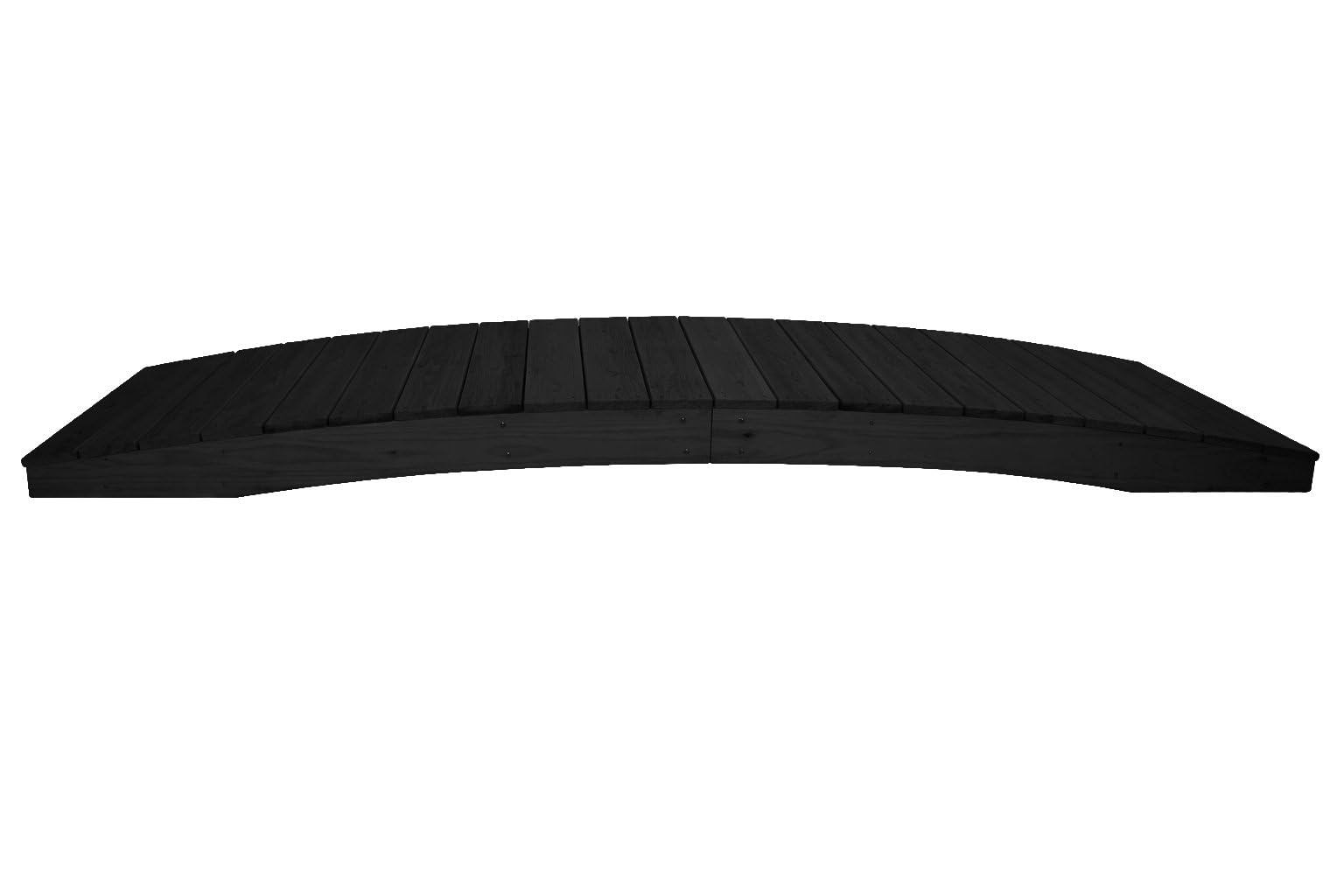
A plank bridge: let the landscape lead
A low-profile deck can leave more of a pond, stone bed or planting visible. It may suit a small decorative setting where another tall feature would make the composition crowded.
For any functional crossing near water or a drop, have the appropriate protection and site requirements assessed professionally. A low visual profile is a styling choice, not a reason to overlook the conditions of use.
Compare all three at the same scale
Use photographs or a simple sketch showing each option in the same location and at the actual dimensions. This prevents a close-up product photo from making a small design appear more substantial than it is.
Our garden bridge options are a starting point for that comparison. Record selected length, clear deck width, rail configuration, intended use and required supports together.
Connect the bridge to one existing feature
Repeat a wood tone, curve or simple color already present in the garden. You do not need every structure to match. A nearby bench can share a tone while keeping a quieter shape.
For broader placement ideas, read bridges for ponds and dry creek beds. For fit, use the bridge sizing guide.
The most successful style makes the bridge’s role clear: a focal point, a quiet connection or a small invitation to explore the garden.