
Posted by Ecommersify Editorial on Sep 26th 2026
Who Are the Amish? Faith, History, Family and Everyday Life
The Amish are Christian communities whose faith shapes the way they worship, raise children, work and relate to their neighbors. Their roots lie in the European Anabaptist movement. Today, Amish life takes many forms across North America, held together by commitments to religious community, humility and a deliberately bounded relationship with the wider world.
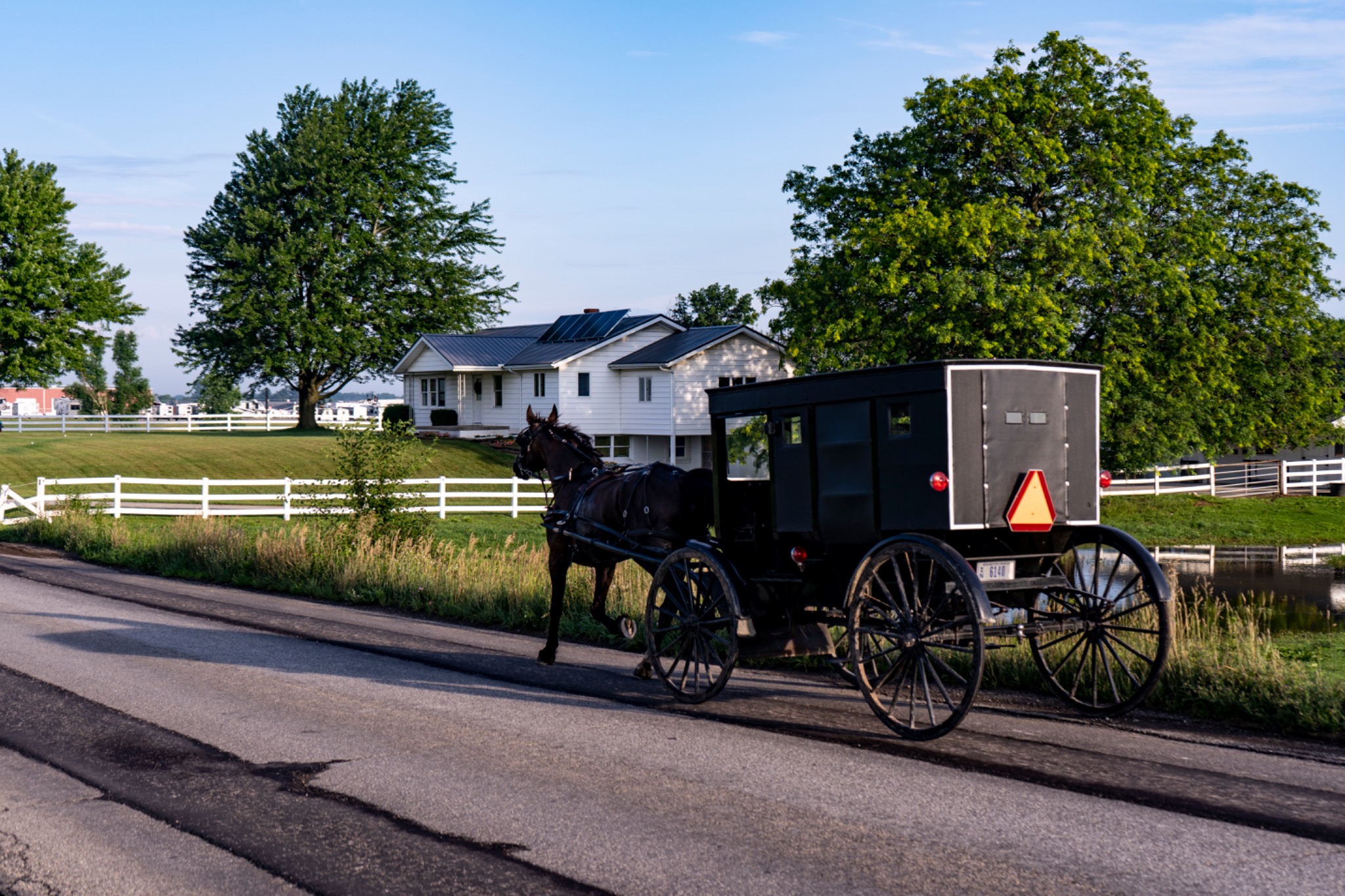
A horse and buggy may be the first thing a visitor notices. Understanding the Amish begins with what is less visible: the beliefs and relationships behind everyday choices.
Where did the Amish come from?
The Anabaptists emerged during the sixteenth-century Reformation. They understood baptism as a commitment made by believers, rather than something decided for an infant. Their convictions brought persecution from religious and civil authorities in Europe.
In 1693, disagreements over church discipline divided Swiss and Alsatian Anabaptists. Followers of Jakob Ammann became known as Amish. Amish and Mennonite traditions share those earlier roots, but developed as distinct communities. Amish families migrated to North America during the eighteenth and nineteenth centuries.
This history helps explain why church membership and shared practice carry such weight. They are part of an inherited religious commitment, with a history far deeper than a preference for an old-fashioned appearance.
What beliefs shape Amish life?
A useful word is Gelassenheit: a willingness to yield oneself to God and to others. Humility, service and responsibility to the congregation receive greater emphasis than individual recognition. Faith is expressed through daily conduct as well as worship.
Local expectations are often described by the word Ordnung, meaning order. These largely unwritten practices address matters such as clothing, technology and conduct. Members affirm their congregation’s Ordnung, and local differences explain why something accepted in one Amish community may be restricted in another.
What happens at an Amish church service?
In many Old Order communities, households take turns hosting worship every other Sunday. The setting may be a home or another suitable space on the property. Singing, prayers, Scripture and sermons bring the congregation together without the elaborate setting many visitors associate with a church building.
The district is therefore both a worshiping body and a network of people who know one another. Religious life is woven into familiar homes and relationships.
Family, work and the rhythm of an ordinary day
Extended family provides support across generations. Work arrangements vary: a household connected to a farm has a different schedule from one running a shop or traveling to outside employment. Some Amish women operate businesses, including stores, bakeries and greenhouses. Older relatives often live close to adult children and remain involved in family life.
Farming is an important tradition, but it is not everyone’s occupation. Woodworking, construction, retail and manufacturing also provide livelihoods. For a closer look at one part of that working world, read how Amish workshops approach tools and technology.
Why Amish communities are not all the same
There is no single Amish way of arranging every detail of life. Affiliations and local congregations differ in dress, transportation, permitted equipment and other practices. Even families within a community have their own personalities, circumstances and interests.
The familiar images become more meaningful when placed in this context. A buggy relates to community boundaries; plain dress relates to belonging and humility; a congregation’s rules relate to a shared understanding of faith. None of these details, by itself, describes a whole person.
Clothing expresses belonging
Plain clothing is part of a shared way of life. Local expectations govern such details as dress, head coverings and men’s beards. These visible practices express modesty and community identity, although their forms differ between affiliations. A familiar style of hat or dress is therefore a clue to a tradition, not a complete account of someone’s life.
How do Amish children learn?
Many Amish children attend small schools operated by their communities, commonly through eighth grade. Lessons include reading, writing and arithmetic, usually taught in English. Practical learning continues through family life, work and vocational experience. The goal is preparation for adult responsibilities within the community.
What is Rumspringa?
Rumspringa describes a period of youth life whose practices differ substantially by community and peer group. Some young people experiment with activities outside customary Amish behavior; many continue familiar routines. Social gatherings can include singing, games, meals and conversation. The sensational picture of universal rebellion leaves out much of this experience.
Baptism is a serious religious commitment, rather than a status automatically conferred by having Amish parents. Decisions about membership sit within strong family and community relationships.
Are Amish and Mennonite the same?
They share Anabaptist roots, but the names refer to distinct traditions. Mennonite communities are themselves diverse. Some dress plainly or travel by horse and buggy; others use cars and a wider range of technology. Appearance alone does not draw a reliable boundary between these related groups.
Continue the story
Explore Pennsylvania Dutch and the languages used in Amish communities, or learn how Amish mutual aid works in everyday life. If craftsmanship brought you here, our Amish-made furniture selection offers a separate way to explore the work, with materials and construction described on each product page.